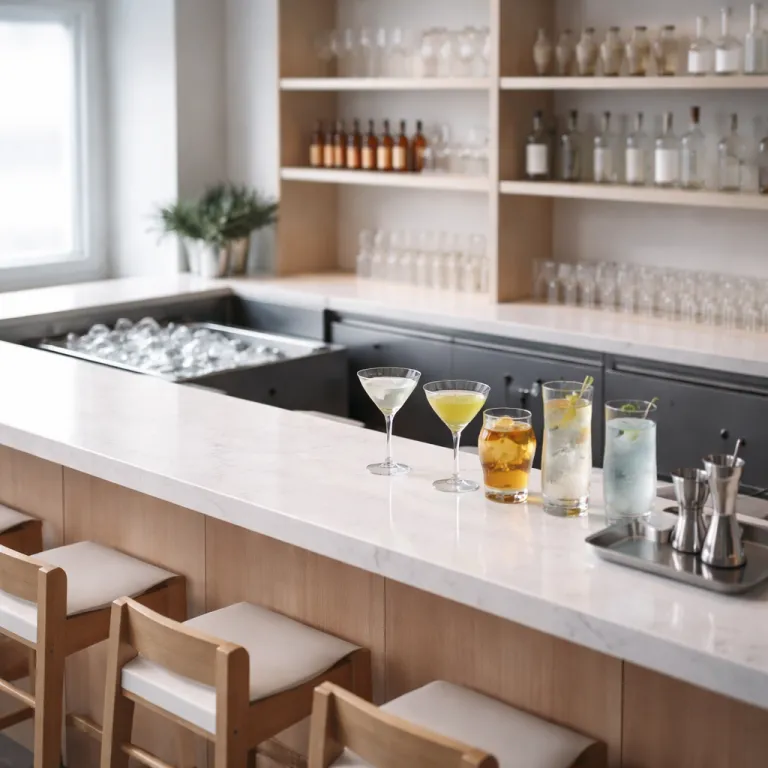
Raleigh’s craft cocktail bars at their Brooklyn moment
Raleigh has always known how to eat well, but the drinks lagged. The city is now entering that 2012 Brooklyn phase where serious bartenders, spec sheets, and stirred cocktails finally match the ambition of its kitchens, and Raleigh craft cocktail bars are learning to relax into their own identity. You feel it on a weeknight in downtown Raleigh when a small neighborhood bar is shaking daiquiris for cooks just off the line.
Walk Fayetteville Street and you see it in the density of cocktail lounges Raleigh now supports. Local guides and tourism reports count roughly 15–18 dedicated craft cocktail spots operating across the city as of 2024, a number that would have sounded fanciful when a “good” Raleigh bar meant a decent Manhattan at a restaurant kitchen counter, and that growth has reshaped how locals plan a night out. The shift is not about chasing the most Instagrammable drinks, but about building rooms where a couple can share small plates, an espresso martini, and a quiet argument about mezcal versus bourbon without shouting over televisions.
The Crunkleton’s arrival from Chapel Hill landed like a gauntlet on Glenwood Avenue. Founded by Gary Crunkleton in 2008 and long regarded as a Chapel Hill institution, the bar brought antique spirits, a deep whiskey list, and a staff that treated a simple daiquiri with the same respect as a rare pour, and suddenly every other Raleigh bar had to decide whether it wanted to compete or stay a volume bar. That Chapel Hill imprint matters because it imported a culture of measured hospitality and meticulous drinks into North Carolina’s capital, not just another shiny room with a long cocktail menu.
Foundation, tucked below street level, has been doing the quiet work for years. Long before “craft cocktails” became a marketing phrase, this downtown Raleigh bar focused on local spirits, restrained garnishes, and a room that felt like a cozy neighborhood bar rather than a stage set, and regulars built their nights around its understated confidence. When you line up Foundation, Whiskey Kitchen, and Watts & Ward, you see the spine of a city finally comfortable calling itself a cocktail city, not just a place for craft beer and barbecue.
Whiskey Kitchen, on Martin Street, bridges restaurant and bar with unusual grace. The kitchen sends out small plates that actually respect the drinks — fried chicken that stays crisp under condensation, charred vegetables that play well with rye, and desserts that do not fight an after dinner cocktail — and the bar team works across hundreds of whiskeys without turning the room into a library. As one longtime regular put it, “You can nerd out over a single barrel or just grab a highball and fried chicken, and nobody makes you feel like you ordered wrong,” and it is the rare Raleigh bar where a neat pour, a round of cocktails, and a shared dessert bar plate all feel equally at home.
Watts & Ward leans into the speakeasy fantasy, but the substance backs up the theatrics. Yes, there is leather, low light, and a maze of rooms, yet the bartenders still care more about the balance of your mezcal sour than the smoke machine, and that keeps this cocktail bar from sliding into theme park territory. On a busy night you will see date night couples, industry folks, and downtown Raleigh office workers all treating it as their own neighborhood bar, which is the real test.
Raleigh craft cocktail bars now sit at an inflection point. The city has the talent, the guests, and the momentum, but it has not yet fully shed the urge to over garnish, over chill, and over complicate drinks that should be simple, and that is exactly why this moment feels so electric. You can taste a city learning that the best bar flex is not a smoked cloche, but a perfectly diluted martini on a random Wednesday night.
The Crunkleton, Haymaker, STIR and the new baseline
The Crunkleton’s opening in Raleigh did more than add another name to the list of cocktail bars. It raised the floor for what guests now expect from bars citywide, from ice quality to spirit selection, and it quietly challenged every neighborhood bar to rethink its own cocktail menu. When a Chapel Hill institution walks into North Carolina’s capital with antique spirits and a serious stirred drinks program, complacency stops being an option.
At The Haymaker, just off City Plaza, the speakeasy aesthetic hides a very modern idea. The team offers customizable proof cocktails in a room that feels cozy without slipping into kitsch, and that proof control lets guests treat drinks like they treat wine pairings, dialing intensity up or down across the night. As one bartender there likes to tell curious guests, “We can always go bigger on the second round, but we can’t un-drink the first,” and that kind of thoughtful calibration is what separates Raleigh craft cocktail bars from generic spots that simply pour stronger.
STIR Raleigh, in the booming warehouse district, obsesses over artisanal ice and house made syrups. Clear, dense cubes change how a spirit forward cocktail opens over twenty minutes, and you notice it most in classics like an old fashioned or a spirit driven mezcal riff, where dilution is the whole game, and STIR’s bar team understands that better than most. When you sit at the bar locals now treat as a pre show stop before live music, you see how far the city has come from watery well drinks.
The Anchor takes a different tack with its nautical theme and sprawling list of more than one hundred cocktails. On paper that sounds like chaos, yet the menu is organized by flavor and spirit in a way that respects both the curious guest and the regular who just wants their usual, and the room feels more like a neighborhood bar than a concept bar. It is the kind of place where a couple can split seafood small plates, sip a bright green gin drink, and still feel like they are in a real city bar, not a cruise ship lounge.
For date night planners, this new baseline changes the whole evening. You can start with a tasting at a local bakery — and if you are plotting a wedding, a guide to wedding cake tasting boxes near Raleigh pairs beautifully with a round of Champagne cocktails — then slide into downtown for a late reservation at a cocktail bar that actually respects your time. The city’s bars now understand that drinks, dessert, and conversation form a single arc, not three separate errands.
One question readers often ask is simple yet revealing. What is a craft cocktail? A cocktail made with high-quality ingredients and innovative techniques. That definition sounds clinical until you watch a bartender at The Haymaker adjust the proof on a guest’s second round because the first drink hit harder than expected, or see a STIR bartender discard a perfectly good cube because it is not clear enough for the glass.
Raleigh craft cocktail bars are also finally taking non drinkers seriously. Many offer non alcoholic or low proof cocktails built with the same care as their boozy siblings, and that inclusivity matters on nights when one person at the table is training for a race or simply does not feel like drinking, and it keeps the whole group in the same room instead of splitting between a bar and a coffee shop. Are reservations required at these bars? Policies vary; check individual bar websites or posted booking notes, especially on weekends.
Speakeasies, gentrification, and the vest problem
The speakeasy wave hit Raleigh later than some cities, which turned out to be a blessing. By the time places like Watts & Ward and The Haymaker leaned into hidden entrances and low ceilings, the national obsession with secret doors had already cooled, and Raleigh cocktail bars could cherry pick the best parts of the trend without swallowing the whole costume. That is why the city’s most interesting drinking rooms feel more like living rooms than movie sets.
Still, there is a fair question about whether this is just urban gentrification wearing a vest. When a former auto shop becomes a dimly lit cocktail bar with twenty dollar drinks, the neighborhood shifts, and not always in ways that serve long time residents, and you can see that tension along stretches of downtown Raleigh where old diners now share the block with sleek bars. The test is whether these spaces behave like fortresses or like true neighborhood bars, and the best of them work hard to be the latter.
Foundation passes that test by staying stubbornly local. The spirits skew toward North Carolina distilleries, the staff knows regulars by name, and the room still feels accessible to service workers finishing a shift, not just tech workers in from the suburbs, and that mix keeps the energy grounded. Whiskey Kitchen does similar work by pairing its craft cocktails with approachable food and a patio that feels like a public square, not a velvet rope.
On Glenwood South, the line between destination bar and neighborhood bar gets blurrier. Dram & Draught, with its whiskey focus and tidy cocktail list, manages to feel like a place Raleigh residents can claim as their own even as visitors treat it as a must hit stop, and that dual identity is rare. William & Company, over in Person Street’s tight knit neighborhood, leans into that local energy even more, with a rotating cocktail menu that nods to seasonal produce and a room that feels like a friend’s kitchen after midnight.
For those who worry that all this signals a loss of the old city, it helps to look sideways at other drinking cultures. A piece on Village Draft House as a benchmark for elevated pub comfort food shows how a long running bar can evolve without losing its soul, and the same principle applies to cocktail bars. The goal is not to freeze Raleigh in amber, but to let bars grow up while still pouring a cold craft beer for the regular who has been coming since the first tap was installed.
There is also the question of performance. Some cocktail bars in North Carolina still lean too hard on smoke, fire, and glassware that looks like it escaped from a chemistry lab, and that can feel like a costume when all you wanted was a clean martini and a quiet corner. The most confident Raleigh craft cocktail bars are already moving past that phase, betting that a perfectly balanced drink in a simple glass will keep you coming back longer than a one time spectacle.
Live music adds another layer to this conversation. A few spots try to be both concert venue and cocktail bar, and the results are mixed, because a room tuned for sound rarely flatters a stirred drink, and vice versa, and guests planning a date night need to know which side of that line a bar stands on. The places that succeed — often with acoustic sets early and louder bands late — understand that the best soundtrack for a serious cocktail is still the low murmur of people talking.
What Raleigh still needs from its cocktail future
For all the progress, Raleigh craft cocktail bars still have gaps. The most obvious missing piece is a truly serious agave program, a bar where mezcal and tequila get the same reverent treatment that rye and bourbon enjoy at Whiskey Kitchen or Dram & Draught, and where the cocktail menu reads like a tour of Oaxaca rather than an afterthought. Right now, agave lovers graze across multiple bars around Raleigh, hunting for one or two thoughtful drinks instead of settling into a single room built around the category.
The city could also use a proper martini bar, the kind of small, almost monastic space that orbits around gin, vodka, and vermouth with a few precise variations. A place where the bartender remembers your preferred ratio, where the only “green” on the drink is a lemon twist, and where the night’s biggest decision is whether you want your martini with oysters or with a simple dessert bar style plate of salty nuts, and Raleigh’s current scene still leans more toward maximalism. When that bar finally opens, it will quietly reset expectations for what a Raleigh bar can be on a Tuesday.
Another opportunity sits in North Carolina’s own backyard. For a state with a growing rum and brandy scene, there is no flagship cocktail bar built around NC rum, sugarcane, and coastal flavors, and that absence feels louder every year. A room that treats local rum the way Foundation treats local whiskey would not just be good for tourism; it would deepen the connection between Raleigh cocktail bars and the farmers, distillers, and bakers who already define the region’s food identity.
Date night guests are also looking for better integration between drinks and food. Too many cocktail bars still treat small plates as an obligation rather than a creative outlet, and you feel it when the only options are reheated bar snacks that wilt under condensation, and that gap sends hungry couples back toward full restaurants. The best bars — think Whiskey Kitchen’s fried chicken or William & Company’s thoughtful bar bites — prove that a tight, focused kitchen can keep people in their seats for a second round.
Raleigh’s dessert culture is ready to meet this moment. Imagine a cocktail bar that collaborates weekly with a local bakery, pairing a rotating pastry case with a flight of espresso martinis, sherry cobblers, and low proof nightcaps, and suddenly the line between dessert bar and cocktail lounge disappears. If you are already mapping your eating calendar around events like the international food festival in downtown Raleigh, you know how powerful those crossovers can be.
Killjoy, Green Light, Blind Barbour, and other tucked away spots hint at what this next phase might look like. Killjoy plays with color and theme without losing sight of balance in the glass, Green Light hides above a pizza shop yet pours some of the city’s most dialed in cocktails, and Blind Barbour turns a strip center location into a surprisingly cozy hideout, and each of these bars shows a different path forward. The through line is simple; the city that can make a good daiquiri on a Wednesday is the city that has arrived.
Key figures shaping Raleigh’s cocktail landscape
- Raleigh currently counts on the order of 15–18 dedicated craft cocktail bars, a figure reported by local guides and tourism roundups and unthinkable a decade ago when serious cocktails were confined to a handful of downtown rooms.
- The Haymaker has been operating since the late 2010s, The Anchor since the mid 2010s, and The Crunkleton’s Raleigh outpost opened more recently, collectively marking a steady, multi year build rather than a single overnight trend.
- Whiskey Kitchen’s collection of several hundred whiskeys positions it as one of the more comprehensive whiskey focused bars in North Carolina, anchoring the city’s reputation for brown spirit expertise.
- Customizable proof cocktails and artisanal ice, as practiced at The Haymaker and STIR Raleigh, illustrate how technique driven details have become standard expectations rather than niche luxuries in Raleigh craft cocktail bars.
- Partnerships between cocktail bars and local breweries, distilleries, and food suppliers show how the drinks scene now feeds directly into Raleigh’s broader hospitality economy, supporting tourism and repeat local business.