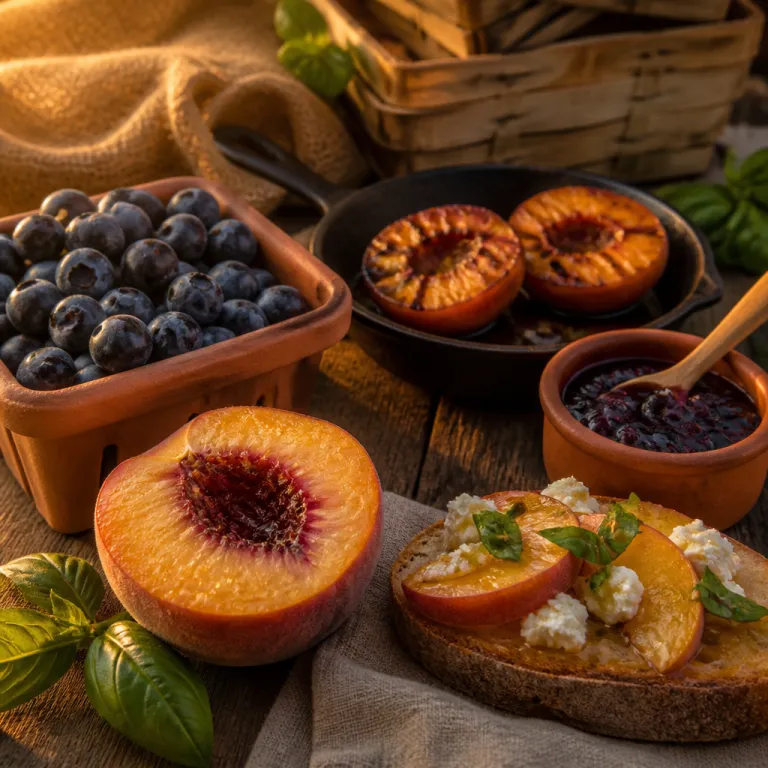
North Carolina summer recipes local produce begin at the market stall
Walk into the State Farmers Market on a July morning and the air smells like warm peaches and crushed basil. This is where North Carolina summer cooking with local produce really starts, long before any recipe card or Pinterest board enters the picture. The smartest Raleigh cooks shop like the chefs at Poole’s and Stanbury do, letting the farmers and their crates of fruits and vegetables dictate the menu.
North Carolina Peach Growers bring in Biscoe, Candor and Carolina Belle varieties, and you can taste the difference between each peach in a single bite. Chatham County blueberry farmers haul in flats of berries that went from bush to box in minutes, which is exactly why they hold their shape in a galette instead of collapsing into jam. Farmers market vendors lean on traditional methods and increasingly sustainable practices, and that care shows up in every salad bowl and every pan of roasted potatoes you pull from your own oven.
When is the NC peach season? Peach season in North Carolina generally runs from June into early autumn, peaking when the heat feels almost theatrical on the asphalt outside the market. Around Raleigh, clingstone varieties usually appear first in mid June, with freestone peaches most abundant from late June through the heart of July. Blueberries from Chatham County usually crest in June and July, which lines up perfectly with the height of summer recipes that rely on minimal cooking and maximum freshness. Growing interest in farm to table dining has pushed more Raleigh locals toward the farmers market, and that shift has made local food less of a trend and more of a weekly habit.
Reading the stalls like a chef: peaches, blueberries and what is truly ripe
At the State Farmers Market off Lake Wheeler Road, the best North Carolina summer dishes built on local produce start with a slow lap, not a rigid shopping list. You watch which farmers have a line, which crates of peaches are down to the last layer, and which pile of summer squash or zucchini looks almost too abundant. That is the farmers market signal that a product is at its peak and priced kindly enough to buy by the kilo instead of by the cup.
For peaches, ignore color and go straight to aroma and feel, because a fragrant peach that yields slightly near the stem will give you a salad and a dessert in the same week. Ask the farmers which varieties they are selling that day, and you will hear names like Carolina Belle or Norman, each with its own balance of acidity and sweetness that shapes how much salt, pepper and lemon juice you will eventually add. When you move to the blueberry tables, especially those from Chatham County farms such as Wild Abandon Farm, look for berries with a dry, dusty bloom and no wrinkling, because that texture holds up when you bake them into a galette or simmer them briefly into a tomato sauce for pork.
Seasonal thinking in North Carolina does not stop at peaches and blueberries, and the same eye helps you choose corn, green beans, sweet potatoes and even butternut squash when the weather cools. If you care about peak fruit, you probably already track the first flats of berries and the last baskets of late peaches the way you track the start of strawberry season around Raleigh, and guides to when strawberry season arrives in North Carolina can sharpen that instinct further. Visit local farmers markets early for the best selection, bring reusable bags and talk to the growers, because those conversations often lead to recipes read aloud between customers and to tips on which stall has the best gluten free baked goods or pasture raised eggs that morning.
Recipe one: peach and burrata salad with basil, honey and Raleigh heat
This peach and burrata salad is the kind of North Carolina summer recipe with local fruit that barely counts as cooking, which is exactly the point on a humid Raleigh evening. You slice two or three ripe North Carolina peaches into thick wedges, arrange them around a ball of burrata, then add torn basil leaves, a drizzle of local honey and a thread of olive oil. The whole plate comes together in minutes, but it eats like something you would find as a starter at Poole’s, where a single perfect ingredient often carries the dish.
For two people, plan on about one large peach per person and half a standard ball of burrata each, plus a generous handful of green basil leaves. If you like measurements, use roughly 8 ounces of burrata, 2 to 3 tablespoons of honey and 2 tablespoons of extra virgin olive oil for a platter. Season the salad with a pinch of salt, pepper and a squeeze of lemon juice, then taste and adjust the salt pepper balance until the sweetness of the fruit and the richness of the cheese feel in sync. If you want more texture, add toasted local food elements such as chopped pecans or thin slices of grilled summer squash or zucchini, which echo the farmers market stalls without overwhelming the peaches.
This salad plays well with grilled corn on the cob, roasted potatoes or even a side of blistered green beans tossed in olive oil and more lemon juice. Because the recipe is naturally gluten free, it works for a mixed table of diners, though a heel of crusty bread from a Raleigh bakery on Person Street or near Oakwood never hurts for those who eat wheat. If dessert is on your mind, save a few extra peaches and look ahead to the blueberry galette, or browse a refined journey through dessert shops near Raleigh for ideas on how local bakeries treat the same fruits vegetables when they are in season.
Recipe two: Chatham County blueberry galette with butter crust and nothing extra
A galette is the least fussy pie you can bake, and it suits Chatham County blueberries perfectly when you want North Carolina summer recipes featuring local berries to feel relaxed. You roll out a simple butter crust into a rough circle, mound the center with fresh blueberries tossed with a little sugar, lemon juice and salt, then fold the edges over and bake until the fruit bubbles. The free form shape looks rustic in the best way, like something you might see on the dessert board at Stanbury next to a plate of goat cheese and local honey.
For one medium galette that serves four to six people, use about three cups of blueberries, two tablespoons of sugar, one tablespoon of lemon juice and a pinch of salt pepper to sharpen the flavor. If the berries are very juicy, add a spoonful of flour or cornstarch so the juices thicken instead of running, and brush the crust with a little milk or cream for color before it goes into the oven at 400 degrees Fahrenheit for about thirty to thirty five minutes. You want the crust deeply golden and the filling bubbling at the edges, because that is when the berries have softened but still taste like themselves rather than like a jarred tomato sauce.
Serve the galette warm or at room temperature, maybe with a scoop of vanilla ice cream or a spoonful of lightly sweetened whipped goat cheese for a tangy contrast. The recipe is not gluten free because of the crust, but you can swap in a gluten free flour blend if you are comfortable adjusting hydration and bake time by a few minutes. Chatham County blueberry farmers work hard to bring in large harvests of fruit each season, and this single fruit dessert respects that effort by letting the berries stay front and center instead of getting lost in a mix of other fruits vegetables.
Recipe three: farmers market gazpacho that changes every Saturday
Gazpacho is where North Carolina summer recipes using local produce become pure improvisation, and the farmers market becomes your pantry. Start with the classic base of ripe tomatoes, cucumber, green pepper and a little onion, then add whatever the farmers have too much of that week, whether it is extra zucchini, summer squash or even a handful of sweet corn kernels. The goal is a chilled soup that tastes like the market smells at ten in the morning, bright, green and a little wild.
For four bowls, think in ratios rather than strict measurements, such as four cups of chopped tomatoes, one cup of cucumber, half a cup of green pepper and another cup of mixed vegetables like zucchini, summer squash or green beans. Blend with a generous pour of olive oil, a splash of red wine vinegar or lemon juice, a small clove of garlic and enough cold water to reach your preferred texture, then season with salt pepper until the flavors pop. Let the soup rest in the refrigerator for at least thirty minutes so the vegetables and fruits meld, because that short wait does more for flavor than any fancy garnish.
When you are ready to serve, taste again and adjust the pepper taste or acidity, then finish each bowl with a drizzle of olive oil and maybe a crumble of goat cheese if you want richness. This recipe is naturally gluten free as long as you skip the traditional bread thickener, and it pairs well with grilled local foods like corn on the cob or roasted sweet potatoes and butternut squash when the evenings start to cool. In Raleigh kitchens from home apartments to restaurant lines, cooks minutes before service often make a similar chilled soup, letting local food and market abundance dictate whether today’s batch leans more toward tomato, cucumber or the surprise crate of overripe peaches that a farmer is happy to discount.
From market crate to restaurant plate: how Raleigh chefs close the loop
What you cook at home with North Carolina summer recipes using local produce is not far from what shows up on menus at Poole’s, Stanbury or the smaller neighborhood spots tucked into Raleigh’s side streets. Those kitchens build their nightly recipes around what the farmers market and direct farm deliveries bring in, whether that is a glut of green beans, a bumper crop of sweet potatoes or a surprise early run of peaches. The line between local food for restaurants and local foods for home cooks is thinner than it looks from the dining room.
At Poole’s, a peach salad might lean savory with shaved fennel, goat cheese and a restrained drizzle of olive oil, while at Stanbury the same fruit could arrive grilled alongside pork, brushed with a light tomato sauce and finished with herbs. Both approaches mirror what you can do at home when you add a few extra minutes of attention to seasoning, tasting for salt pepper balance and adjusting lemon juice or vinegar until the dish feels complete. Raleigh’s better bakeries and cafes also pull heavily from the farmers market, folding blueberries into galettes, layering butternut squash into tarts and turning surplus fruits vegetables into jams and compotes that show up on breakfast plates.
For home cooks, the lesson is simple but powerful: shop like a chef, then cook like yourself. Start with what looks best at the farmers market, whether that is corn, potatoes, zucchini or crates of peaches and blueberries, and let those ingredients dictate whether tonight is about salad, gazpacho or a tray of roasted vegetables. The real measure of a North Carolina summer recipe using local produce is not the Yelp star, but the line out the door on a Tuesday at the stalls and restaurants that treat those ingredients with respect.
FAQ
When is peak season for North Carolina peaches around Raleigh ?
North Carolina peaches around Raleigh typically come into season in early summer and continue into early autumn, with the heaviest volume in the hottest stretch of the season. You will see the most varieties and the best prices at the State Farmers Market from late June through the heart of July. Plan to arrive in the morning, when the fruit is cooler and the selection has not yet been picked over.
When can I find Chatham County blueberries at local markets ?
Chatham County blueberries usually appear at Raleigh area farmers markets from early June and stay strong through July, depending on weather. Many stalls label their berries by county, so you can look specifically for Chatham fruit if you want that regional character. For an even closer connection, some farms in the county offer pick your own days, which turn your summer recipes into a full day’s outing.
How can I support local farmers while cooking summer recipes ?
The most direct way to support local farmers is to buy your fruits vegetables, eggs and other staples at farmers markets or through farm stands and community supported agriculture shares. When you plan North Carolina summer recipes using local produce, build your menu after you shop, so you can respond to what the growers actually harvested that week. Talking with farmers about how they grow and what they recommend also helps you learn which stalls prioritize sustainable practices.
Are these peach, blueberry and gazpacho recipes suitable for gluten free diets ?
The peach and burrata salad and the farmers market gazpacho are naturally gluten free as long as you avoid serving them with wheat based bread or croutons. The Chatham County blueberry galette uses a traditional wheat flour crust, but you can adapt the recipe with a gluten free flour blend and a little extra care with hydration and bake time. Always check packaged ingredients like cheese or vinegar if you are cooking for someone with celiac disease or a severe gluten sensitivity.
What should I bring or know before visiting a Raleigh farmers market ?
Arrive early with reusable bags, a small cooler if you plan to buy dairy and enough cash or a card, because some smaller vendors may not accept every payment type. Walk the entire market once before you buy, so you can compare prices and quality between stalls and decide which peaches, blueberries or vegetables look best. If you are unsure how to use an unfamiliar ingredient, ask the farmer for a simple recipe, because many of the best summer recipes start as quick instructions shared across a table of produce.